
Monthly Archives: November 2016

lexicon: dogsbody

Dogsbody


Forms: dogsbody

Related terms/ideas: Dog/s, body/ies, dogskull, dogsniff, bitchbody

Explication:

In Ulysses, the term “dogsbody” only occurs five times. The first time it is used condescendingly by Buck to describe Stephen, and the second use occurs almost immediately after, as Stephen internalizes the term and refers to himself as a dogsbody. The other two instances occur in Episode three as Stephen watches a dog sniff the carcass of another dog. Interestingly in this instance, the term is actually used to describe the body of the dead dog, and follows the terms “dogskull” and “dogsniff”. Thus in the second two instances, it used like many of Joyce’s other combined words and literally means the body of a dog.

In the first two instances of its use between Buck and Stephen, Buck uses this term to call attention to Stephen’s need of appropriate clothing and secondhand clothes, which seems to be an incorrect use of the word. A few passages later, Stephen looks in a mirror and seems slightly repulsed at his face, thinking “Who chose this face for me? This dogsbody to rid of vermin” (episode 3). He seems to internalize Buck’s insult, but again does not use the term in its dictionary definition. In Ulysses, this second definition of “dogsbody” seems to be an insulting term for someone who appears to be of a lower class, a status which is marked by secondhand clothing and an association with pests.

The term again resurfaces for a final time in the Circe episode, as an imaginary Buck Mulligan tells Stephen “The mockery of it! Kinch dogsbody killed her bitchbody. She kicked the bucket” (episode 15). Again, this term becomes associated with Buck, Stephen, death, and corpses. From its five uses in the novel, the word emerges with two somewhat distinct definitions; the first falls into Joyce’s familiar custom of putting two words together that literally mean those two words. An example of this first described instance comes from Episode 3, as Stephen watches a dog sniff another dead dog’s body. However, the second definition is slightly more complicated. It is a term that Buck calls Stephen to insult him, one that becomes associated with his body, physical appearance, and lack of appropriate clothing. That said, once Buck calls Stephen a dogsbody, Stephen seems to internalize it as a source of shame, which further becomes visible as he associates the term with his mother’s death in Circe.

The bodies of actual dogs are also important to the novel as well. Many dogs appear throughout the novel, but there are two that are specifically interesting. In “Cyclops”, the dog Garryowen appears to belong to the citizen, but we later find out he is owned by Giltrap (who is Gerty MacDowell’s grandfather). Garryowen seems to mainly exist in the novel as a tool of intimidation–as he mostly sits and growls–but there is an odd moment in which the citizen “starts hauling and mauling and talking to [Gerryown] in Irish and the old towser growling, letting on to answer, like a duet in the opera” (episode 12). In Circe, Bloom is followed by a dog that he imagines is continuously changing its body, as it becomes a retriever, a wolfdog, and mastiff. He feeds the dog the organs that he has been carrying, but it continues to follow him throughout the episode, and the occasional bark or dog noise is mentioned in the narration.

 Definitions and examples:

Noun:

  1. naut. slang: Peas boiled in a cloth, pease pudding (sea biscuits softened in water, with sugar added)

    –On the ship, the sailors were regularly served dogsbody.

  2. a junior officer or midshipman

    –Lyle had just joined the navy, so he was known as a dogsbody on the ship.

  3. colloq. a person who is given menial tasks

    –Having just joined the crew, Matthew was forced to do the terrible jobs of a dogsbody.

Verb

4. to act or work as a dogsbody; to carry out menial tasks.

–New cops on the force must do their time dogsbodying and patrol traffic.

Related topics:

dirty clothing, corpses, bodies, Kinch/Stephen Dedalus, Buck Mulligan
Hyper-Annotation

Osteen, Mark. The Economy of Ulysses: Making Both Ends Meet. 1st ed. Syracuse, NY: Syracuse UP, 1995. Print.


The Economy of Ulysses employs Joyce’s personal biography to draw conclusions about the way money operates within Ulysses, specifically how Joyce’s upbringing and life contributed to certain representations of exchange within Ulysses. “He retained the self-image of a gentleman and the Victorian attitude that a Gentleman do not work but coupled it with an inability to hold on to the jobs or money that might actually have permitted such gentility” (7).  First, Osteen fixes many of the prominent aspects of Ulysses critiques within an economic framework by evaluating language, plot, and psychoanalysis with an eye to “Exchange”, reciprocity, and currency. Every element within the novel can be distinguished as an “asset” belonging to some pertinent party and so an “economy” is established in which certain characters incur debt or earn some value from every exchange within the novel. Osteen then interprets every chapter through this viewpoint, and maintains an active count of who benefits (always noting their ethnicity and class in comparison with Joyce’s experiences) asserting throughout the novel that these transactions reveal underlying power structures in Ulysses and can reveal individual character’s communal power relative to others. In this manner, he tallies “the economy of souls”, differentiates Irish, English, and Jewish economic habits, discusses an economy of language, an economy of errors, and the pertinence of gambling/prostitution within the context of these larger economies, although Osteen clarifies that not every interaction in the novel perfectly fits his theoretical lens.


References:

Ellmann, Richard. Selected Letters of James Joyce. London: Viking, 1966. Print.

Joyce, James. Finegans Wake. 1st ed. Vol. 3. New York: Viking, 1953. Print.


Obsession and Themes:

Consumption and Spending

Numbers and Numerology

Religion

Sexualities

Creation and Making

First Hyperannotation: Michael Livingston

Livingston, Michael. “”Dividends and Divisors Ever Diminishing”: Joyce’s Use of Mathematics in “Ithaca”” James Joyce Quarterly 41, no. 3 (2004): 441-54.

In this article, Michael Livingston argues that it is a mistake to suppose that Joyce’s use of mathematics in Ithaca was due to Joyce being a skilled (or even competent) student of math. Rather, Joyce was aware of his limitations, and by acknowledging them, readers can gain a deeper understanding of how mathematical error and limits play a role in Ithaca.

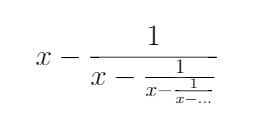
Livingston begins with a very comprehensive survey of mathematical and scientific errors in Ithaca identified by himself and other critics. He then looks to biographical information and Joyce’s notebooks in order to ascertain the extent to which Joyce was fluent in mathematics. He concludes that Joyce was familiar with algebra and Euclidean geometry, but not higher mathematics. (In this he goes against the conclusions of Mines and Dasenbrock, who argue that Joyce had a grasp of some parts of calculus and set theory as well). The one concept from calculus Livingston does identify in Joyce’s notes is the concept of limits that could be approached but never reached, such as:infinite-sumWith Joyce’s lack of mathematical expertise established, Livingston then presents a reading of the math in Ithaca that doesn’t require Joyce to be a mathematical genius. He suggests that Ithaca is an “immense parody of naturalistic and scientific reasoning” (449). The reader of Ithaca, says Livingston, is ultimately distanced from the narrative by the inadequacy of both the catechistic question-answer format (leaving us with only more questions like “Who was M’Intosh?”) and the limitations of scientific concepts at representing reality.

Citations and Related Sources:

McCarthy, Patrick A. “Joyce’s Unreliable Catechist: Mathematics and the Narration of “Ithaca”” ELH 51, no. 3 (1984): 605-18. doi:10.2307/2872940.

Mines, Ray, and Reed Way Dasenbrock. “”Nought Nowhere Was Never Reached”: Mathematics in “Ulysses”” James Joyce Quarterly 35, no. 1 (1997): 25-36. http://www.jstor.org/stable/25473867.

Salvadori, Mario, and Myron Schwartzman. “Musemathematics: The Literary Use of Science and Mathematics in Joyce’s “Ulysses”” James Joyce Quarterly 29, no. 2 (1992): 339-55. http://www.jstor.org/stable/25485263.

Themes: Numbers/Numerology, Science, Biographical Criticism

Formatted Lexicon Entry (Final)

“The soul is in a manner all that is: the soul is the form of form. Tranquility sudden, vast, candescent form of forms.” (U 2, 1245). This early quote by Talbot in Nestor frames Joyce’s use of the “soul” throughout the novel as being the “inherent quality” of a person place or thing. Used sixty-six times within the novel and in every single chapter of the book, “soul” encapsulates Joyce’s concern with the ever-evolving self and essence of being. Instead of drawing from a plurality of vastly differing definitions, Joyce uses repetition and juxtaposition to compare slightly different definitions of the word soul. Joyce connects different characters’ extremely personalized definition of the phrase with the more traditional and ecclesiastical definition of soul by placing these conflicting concepts within jarring proximity to one another. (U3 2165, 2366). The inherent uncertainty surrounding identity throughout the plot is exemplified through these slightly varying takes on what should be a concrete concept. If the soul is the unchangeable inherent quality of an individual, then the treatment of the word in the text reveals the ways in which Joyce attempt to undermine this uncertainty.

The intersectionality of many characters further complicates the word’s use, as exemplified by Bloom’s joint Judaic and Catholic identity. The discrepancies between these two religions should have ramifications on the soul, per both belief systems, an irony the repetition exacerbates. “Now he’s really what they call a dirty jew… And may the Lord have mercy on your soul” (U 8 8681).
In addition to complicating preconceived notions of what the soul is, Joyce is interested in taking these canonical interpretations of the word “soul” and complicating the matter through related terms like “metempsychosis”. Defined as “the supposed transmigration at death of the soul of a human being or animal into a new body of the same or a different species”, this frequently recurring word reflects the structure of the novel; particularly in sections like Circe where the inanimate, animal, and “distinctly human” become indistinguishable. The “inherent quality”of characters is lost through Joyce’s deconstruction of the text itself, assigning dialogue to unexpected speakers or burying a speaker’s identity within the text. These occasionally sacrilegious overtones that permeate throughout the text align with the obfuscation of what a “soul” truly is. Even the definition provided by Talbot unravels in later chapters.The frequency with which we encounter the word normalizes what is traditionally considered extraordinary, and allows Joyce to play with the concept of a “soul” through both his shifting characterization and varied modes of storytelling, despite its well-established traditional definitions and connotations.

  1. Soul, noun.(OED 2) An essential principle or attribute of life, and related senses; animate existence; this viewed as a possession of which one is deprived by death. death.
  • “The soul has been stricken mortally, a poison poured into the porch of a sleeping ear”(U 9411-9412)
  1. (OED 2c) Without article, contrasted with body, life (in early use also †licham), regarding the separation between a person’s immaterial or spiritual attributes and his or her physical form or existence
  • “The soul is the manner of all that is: the soul is the form of forms”(U1245-1246)
  • (OED3a) The seat of a person’s emotions, feelings, or thoughts; the moral or emotional part of a person’s nature; the central or inmost part of a person’s being.
  • “A hesitating soul takes arms against a sea of troubles, torn by conflicting doubts, as in real life” (U8742-8743)
  1. (OED3b) As a mass noun. Strength of character; strongly developed intellectual, moral, or aesthetic qualities; spiritual or emotional power or intensity; (also) deep feeling, sensitivity.
  • “Most trenchant rendition of that ballad, upon my soul and honor it is”(I14007-14008)
  1. (OED2a) The principle of intelligence, thought, or action in a person (or occas. an animal), typically regarded as an entity distinct from the body; the essential, immaterial, or spiritual part of a person or animal, as opposed to the physical.
  • You as a good catholic, he observed, talking of body and soul, believe in the soul. Or do you mean the intelligence, the brain power as such, as distinct from any outside object.


Lexicon Entry Final: Cross

Cross

Forms: Cross, Across, Crossed, Crosses, Crossing, Crosstree

Related Topics: Religion, Catholicism, Travel, Movement

Explication:

The most common form of “Cross” in Ulysses is “across” which denotes movement from one side to another or a position in relation to another position. Joyce uses this word 64 times throughout Ulysses to express movement or a certain positionality, “A point, live dog, grew into sight running across the sweep of sand,” (U. 3. 294). This is a straightforward usage of the word although it has the ability to retain the Christian imagery of the cross.

Another common form of cross is “crossed” which is the past participle of cross. Crossed is used in multiple ways throughout Ulysses, one of which being the physical act of past movement from one position to another, “He crossed at Nassau street corner,” (U. 8. 551). Crossed can also indicate the act of crossing oneself in a religious manner, “Father Conmee read in secret Pater and Ave and crossed his breast,” (U. 10. 193). This form of cross is unique in that both meanings can be used simultaneously creating a double-entendre. This is important to note as Joyce occasionally employs this word to produce ambiguity in the meaning. In conjunction, cross as the concept of movement and cross as a religious symbol can imply the movement of religion. Leopold Bloom struggles with his Jewish identity in the face of Irish Catholicism which acts in alienating Bloom.

Some other forms of cross used by Joyce include Cross and Crossing. The OED cites Cross as having a few different variations and an ability to occupy multiple parts of speech. Cross is both a verb which means to move from one position to another and a noun which incorporates Christian themes as Jesus was crucified on a wooden cross, “Mr Bloom walked unheeded along his grove by saddened angels, crosses, broken pillars, family vaults, stone hopes praying with upcast eyes, old Ireland’s hearts and hands,” (6, 928-930). This is a relevant definition for Ulysses which draws heavily on Catholicism and religion. Cross can also be used to express anger or an opposition. Stephen crosses his mother’s dying wish by failing to execute religious acts, “You crossed her last wish in death,” (1, 212).

Definition and Examples

Noun

  1. A kind of gibbet used by the ancients (and in later times by some non-Christian nations); a stake, generally with a transverse bar, on which they put to a cruel and ignominious death certain criminals, who were nailed or otherwise fastened to it by their extremities.

“Mr Bloom walked unheeded along his grove by saddened angels, crosses, broken pillars, family vaults, stone hopes praying with upcast eyes, old Ireland’s hearts and hands,” (6, 928-930).


  1. The sign of the cross made with the right hand, as a religious act. Cf. sign of the crossat sign Phrases 1.
  2. A representation or delineation of a cross on any surface, varying in elaborateness from two lines crossing each other to an ornamental design painted, embroidered, carved, etc.; used as a sacred mark, symbol, badge, or the like.

“Moving through the air high spars of a threemaster, her sails brailed up on the crosstrees, homing, upstream, silently moving, a silent ship,” (3, 503-505).


Adjective

  1. Lying or situated athwart the main direction; transverse; passing from side to side. Also saidof things to which spatial relations are transferred.

“He turned away and sauntered across the road,” (5, 47).


  1. Passing or lying athwart each other; crossing, intersecting.

“Stately, plump Buck Mulligan came from the stairhead, bearing a bowl of lather on which a mirror and a razor lay crossed,” (1, 1-2).

  1. Diagonally opposite in position (as in a quadrilateral). rare. Cf. cross-corner n.

“Two crossed keys here,” (7, 142).


  1. Contrary, opposite, opposed (toeach other, or tosomething specified). (Now rarely predicative.)
  2. Of events, circumstances, or fortune: Adverse, opposing, thwarting; contrary to one’s desire or liking; unfavourable, untoward.

“And temper getting cross,” (6, 745-746).


Verb

  1. To crucify. Obs.
  2. To make the sign of the cross upon or over.

“Buck Mulligan made way for him to scramble past and, glancing at Haines and Stephen, crossed himself piously with his thumbnail at brow and lips and breastbone,” (1, 692-694).


  1. To mark with a cross in sign of a vow; of the vow to wrest the Holy Land from the Saracens; = croise v.2. Obs.

“All crossed themselves and stood up,” (5, 414).


  1. To pass over a line, boundary, river, channel, etc.; to pass from one side to the other of any space.

“He turned northeast and crossed the firmer sand towards the Pigeonhouse,” (3, 159-160).


  1. To thwart, oppose, go counter to.

“You crossed her last wish in death and yet you sulk with me because I don’t whinge like some hired mute from Lalouette’s,” (1, 212-214).


Final Lexicon Entry: Wake

Wake

Forms:

wake, waken, waking, wakening, awake, awaken

Related terms:

core/corps/corpse, custom, end, occupy, rise, sight, up

Explication

In Ulysses, “wake” is most commonly used as an adjective when describing ones current state or presence after having been asleep, whether it be forceful, mistakenly, or naturally. In addition to this, for some of the characters, there are instances where either positive or negative connotations can be applied, in that being awake is an escape from a nightmare, “History, Stephen said, is a nightmare from which I am trying to awake” (U 2.377) or being asleep is an escape from reality, “No more pain. Wake no more. Nobody owns.” (6.365).

Joyce also uses this term in terms the “following” or “aftermath” of a person or thing by another, “Both smiled over the crossblind at the file of capering newsboys in Mr Bloom’s wake, the last zigzagging white on the breeze a mocking kite, a tail of white bowknots” (U 7.444-445). This “following” can either be unwanted or unavoidable, and serves as a reminder that there is more than meets the eye.

Moreover, Joyce refers to “wake” in terms of the religious ceremony that precedes a funeral. Throughout the story, there are several instances where we are given constant references to Dignam’s death and funeral. It is almost as though there is always a reminder (like a ghost) about his death. Not only that, we get many scenes where characters are watching someone or something. A wake refers to the watch over a person’s body, which many do outside of a religious aspect.

From these three instances, “wake” serves a very interesting role as a connection between life, death, and the afterlife. Because Joyce is able to manipulate “wake” in these ways, when taken out of contect in some cases, it is interesting to see the differences each definition makes when switched with another.

Definitions and Examples

I. n., The state of wakefulness esp. during normal hours of sleep. Obs. exc. in sleep and (or) wakewake and dream.

II. n., The watching (esp. by night) of relatives and friends beside the body of a dead person from death to burial, or during a part of that time; the drinking, feasting, and other observances incidental to this. Now chiefly Anglo-Irish or with reference to Irish custom. Also applied to similar funeral customs in other times or among non-Christian peoples.

  • “Relics of old decency. Mourning too. Terrible comedown, poor wretch! Kicked about like snuff at a wake” (U 6.234-35)
    • This particular quote is interesting becuase Joyce uses a play on words with “awake” and “a wake.”

III. Used by Hogg for: A serenade, nocturnal song.

IV. With unfavourable implication: To sit up late for pleasure or revelry; to turn night into day.

V. To be active, alert, stirring, vigilant. Const. as above; also, to be diligent, exert oneself to(do something). to wake over, to occupy one’s mind with. Obs.”

VI. Phrases. to fetch (get, get into, have) the wake of (a pursued vessel): to get so close to her as to be able to see, and steer by, her wake. to stay a weather of a wake:

  • “The ball bobbed unheeded on the wake of swells, floated under by the bridgepiers” (U 8.58-9)
  • “She trudges, schlepps, trains, drags, trascines her load. A tide westering, moondrawn, in her wake.” (U 3.392-93)

VII. The disturbance caused by a body swimming, or moved, in water

VIII. Naut. or quasi-nautical. in the wake of (a vessel)in her (its) wake, etc.: immediately behind, and (properly) in the actual track made by, a vessel; immediately backward and along the track made. Also used of any person or persons aboard, as in his, our, etc., wake; behind his, our, etc., vessel.

Related Topics:

Alive, sleep, death, after life, celebration, dream, consciousness, aware, follow

Hyper annotation 1

Bertolini, C. D. “Bloom’s Death in “Ithaca,” or the END of Ulysses.” Journal of Modern Literature, vol. 31 no. 2, 2008, pp. 39-52. Project MUSE, muse.jhu.edu/article/233963.

In this journal, Bertolini examines the possibility that Leopold Bloom may have died in Episode 17 “Ithaca.” The journal looks at the relationship between both Molly and Bloom and how from the beginning we see the ways in which they communicate are often attributed to the unspoken. This idea that such communication exists, paired with the notion that there is tension between fact and opinion, shows how the narrative technique begins to take shape using a series of questions and answers. Bertolini references Hugh Kenner, who says that “Bloom’s question is a response to ‘a murmur the narrator has not transcribed’ or to a nonexistent question he calls a ‘no-murmur’ or ‘no-questions’ “ (42) The fact that there is such a technique illustrates to the reader that information does not necessarily need to be communicated out loud, as demonstrated by Bloom and Molly, and Bloom’s moments of streams of consciousness.

Final Lexicon Entry: Tooth

Tooth

Forms 

toothless, toothache, toothsome, gaptoothed, toothed, buckteeth

Related Terms

shell, dentist, chew, milk, bite

Explication

Teeth are mentioned many times over the course of Ulysses. Throughout the text, they serve as symbols of power and carnality. In Episode II, Stephen refers to stone lions as “toothless terrors” (U 2.429-30). When Bloom is disgusted by the meat-eating men in Laestrygonians, he observes how one man has “no teeth to chewchewchew it” (8.660). The ever-virile Blazes Boylan keeps a red rose “between his smiling teeth” (U 10.335). In Ulysses Annotated, for the annotation to line 3.495 mentioned above, Don Gifford quotes J.E. Cirlot’s A Dictionary of Symbols, writing that “Teeth are the ‘primogenal weapons of attack’; thus their loss or decay is symbolic of ‘fear of castration or complete failure in life, or inhibition” (Gifford 66).

Teeth are also frequently associated with animals throughout the text. In Episode 5 Bloom encounters a horse’s “gently champing teeth,” (U 5.214) and in Episode 4 he contemplates his cat’s “milkwhite teeth” (U 4.34). The latter example invites connections involving milk, such as the scene with the old milkwoman, or Bloom’s fascination with lactation as described in Penelope.

Finally, teeth also serve as indicators of health and hygiene. In Episode I, Buck Mulligan describes Ireland as a “country full of rotten teeth and rotten guts” (1.412). Most notably, Buck Mulligan frequently refers to Stephen as “toothless Kinch.” Stephen also muses on his poor dental hygiene in Episode III: “My teeth are very bad. Why, I wonder. Feel. That one is going too. Shells. Ought I go to a dentist, I wonder, with that money?” (3.495-6).

Though not encompassing many puns or double-meanings, teeth are connected to many other words and topics in the text. One of these is the word shells, inserted seemingly randomly into Stephen’s interior monologue as he muses about has bad teeth (quoted above). The lexicon offers a variety of meanings for “shells”, including “a symbol for wealth and power,” places of comfort and security, and battlefield explosives. In this particular example, the connection between shells in the sea is interesting, given Stephen’s hydrophobia and fear of drowning.

Teeth are also the bodily organs upon which dentistry is practiced, opening up another realm of connections. In line 1638 of Cyclops, Jack Power asks if Leopold Bloom is a cousin of “Bloom the dentist.” This case of mistaken identity reappears in Circe, when Bloom introduces himself to the Watch as “Dr [sic] Bloom, Leopold, dental surgeon” (15.721). This, then, relates to both Bloom’s interest in science, his tendency toward voyeuristically peering at bodily orifices, and (given the associations between teeth and power, and the fact that dentists heal teeth), perhaps even Bloom’s complicity with Molly’s infidelity.

Definitions and Examples

I. tooth, n (OED 1.a) “In plural, the hard processes within the mouth, attached (usually in sockets) in a row to each jaw in most vertebrates except birds (but also in some extinct birds), having points, edges, or grinding surfaces, and serving primarily for biting, tearing, or trituration of solid food, and secondarily as weapons of attack or defence, and for other purposes; in singular, each of these individually.”

“Blazes Boylan looked in her blouse with more favour, the stalk of the red flower between his smiling teeth.” (U 10.335)

II. (OED 2.b) “Referring to biting or gnawing; hence denoting a hurtful, hostile, destructive, or devouring agency or quality.”

“Every fellow for his own, tooth and nail.” (U 8.701)

III. (OED 3.a) “As an artificial structure, in an implement, machine, etc.; e.g. one of the pointed projections of a comb, saw, file, rake, harrow, fork, etc.; a prong, tine; one of the series of projections on the edge of a wheel, pinion, etc., which engage with corresponding ones on another; a cog.”

“He is prematurely bald from selfabuse, perversely idealistic in consequence, a reformed rake, and has metal teeth.” (U 15.1781-2)

“Eeltraps, lobsterpots, fishingrods, hatchet, steelyard, grindstone, clodcrusher, swatheturner, carriagesack, telescope ladder, 10 tooth rake, washing clogs, haytedder, tumbling rake, billhook, paintpot, brush, hoe and so on.” (U 17.1564)

Related Topics

Bodies
Medicine
Science
Animals
Gender/masculinity

Final Lexicon Entry: Blind

**due to formatting issues, I’ve also attached a word document to this blog post.

final-%22blind%22-lexicon-lrw

Forms

blind, blindly, blinder

Related Terms

Curious

Glass

Limp

Shell

Explication

Blind, and the ways in which the word relates to sight and the prevention of seeing, serves a few main purposes throughout Ulysses, mostly surrounding the function of sight. The first comes in the noun form of the word—an item that blocks out light or causes individuals to lose the ability to see. Throughout the novel, the image of a blind often comes up with reference to a character’s proximity to a window and the purpose it does or does not serve. One of the first interactions readers witness between Leopold Bloom and his wife, Molly, involves an inquiry about a physical blind: “—Do you want the blind up? / Letting the blind up by gentle tugs…” (U. 4.255-256). In this sense, the object of a blind operates a noun with a specific purpose: to prevent a certain capability (sight or light) from occurring.

The ways in which blind insinuates the prevention of sight and inability to see is a trend continued by the repetitive use of the adjective form of the word as well. Blind as an illustrative adjective reoccurs throughout the novel, often used to describe historical figures (i.e. “old blind Abraham” U. 5.201), as well as recurring characters (refer to U. 8.1075). As expected, this form of blind depicts images of those who cannot see. Throughout the novel this form is used to both describe characters that are actually incapable of sight, or simply those who show attributes that would label them as such (i.e. obliviousness). This less literal version of blind as an adjective comes about to describe a certain type of belief that appears at different moments throughout Ulysses. Because it is a novel filled with (often ironic) religious imagery, Joyce’s word choice of “blind faith” (U. 5. 377) must be evaluated with this tone in mind. In this way, blind comes up as a description of those who take comforts in religion without any worry or deeper understanding, a concept complicated throughout Ulysses.

The recurrent usage of the word blind persists as an involuntary situation of sorts when considering the use of the word as a verb. Although sparsely used throughout the novel, blind as a verb does come up to convey the action of causing a state characterized by the inability to see. Such a use seems to illuminate not only the repetition of the unfortunate state, but also the more harsh connotations that can come along with it. The first time the verb form of blind occurs is in reference to both an animal, and not actually carrying out the action: “it wouldn’t blind him” (U. 12. 700). Although this portrays an occurrence in which the verb wouldn’t actually happen, the repetitive use of the word throughout Ulysses makes such an instance stand out. The novel spends much time depicting characters (and animals) with reference to their ability to see, and their awareness of the space in which they inhabit. By reusing the word in its various forms, blind appears to describe multiple conditions characterized by lack of an attribute.

Definitions and Examples

  1. Blind, n.
    I. Anything which obstructs the light or sight. (OED 1).
  • “Letting the blind up by gentle tugs halfway” (U. 4.256)
  • “The gay sweet chirping whistling within went on a bar or two, ceased. The blindof the window was drawn aside.” (U. 10.249-250) 
  • “Miss Douce’s brave eyes, unregarded, turned from the crossblind smitten by sunlight. Gone. Pensive (who knows?), smitten (the smiting light), she lowered the drop blindwith a sliding cord.” (U. 11.460-462)

II. spec. A screen for a window, made of woven material mounted on a roller, of wire gauze,etc.; used to prevent the entrance of too much light, or to keep people from seeing in. Venetian blindsn. those made of light laths fixed on strips of webbing. (OED 2)

  • “He passed an arm through the armstrap and looked seriously from the open carriagewindow at the lowered blindsof the avenue” (U. 6.10-12)
  • “The room in the hotel with hunting pictures. Stuffy it was. Sunlight through the slats of the Venetian blind” (U. 6.360-361)

Special Uses: blind faith. belief or confidence (in a person or thing) without any evidence or proof. (OED)

  • Blind faith. Safe in the arms of kingdom come. Lulls all pain. Wake this time next year. (U. 5.377-378)
  1. Blind, adj. (and adv.).
    I. Literal
    a.
    Destitute of the sense of sight, whether by natural defect or by deprivation (OED 1.a).
  • “The scene he was always talking about where the old blindAbraham recognises the voice and puts his fingers on his face” (U. 5.201-202)·
  • “A blindstripling stood tapping the curbstone with his slender cane. No tram in sight. Wants to cross. –Do you want to cross? Mr Bloom asked. The blind stripling did not answer. His wallface frowned weakly. He moved his head uncertainly.” (U. 8.1075-1079)
  • “You’re blinder nor I am, you bitch’s bastard!” (U. 1119-1120)

i. to go it blind: to act without previous investigation of the circumstances; to plunge without regard to the risks involved.

  • “Phew! Dreadful simply! Child’s head too big: forceps. Doubled up inside her trying to butt its way out blindly, groping for the way out.” (U. 8.374-376)·

    d. absol. A blind person, esp. as pl. Those who are blind, as a section of the community. (OED 1.d)

    · “they did divers wonders such as casting out devils, raising the dead to life, multiplying fishes, healing the halt and the blind, discovering various articles which had been mislaid, interpreting and fulfilling the scriptures, blessing and prophesying” (U. 12.1723-1726)

IV. Combinations
15. General, as blind-born, blind-drunk (Sc. blin’-fou), so intoxicated as to see no better than a blind man (OED IV.15)

  • “I had to laugh at the way he came out with that about the old one with the winkers on her, blind drunk in her royal palace every night of God” (U. 12.1393-1394)
  1. Blind, v.
    I. trans. To make blind, deprive of sight (OED 1).
    a. permanently
  • “I’d train him by kindness, so I would, if he was my dog. Give him a rousing fine kick now and again where it wouldn’t blind” (U. 12.698-700)

Related Topics

Science, Thought and Action, Ability, Medicine

Hyper Annotation: “The Key in ‘Ulysses'”

White, Patrick. “The Key in ‘Ulysses.’” James Joyce Quarterly, vol. 9, no. 1, 1971, pp. 10-25.

Link to citation page: http://www.jstor.org/stable/25486940?Search=yes&resultItemClick=true&searchText=the&searchText=house&searchText=of&searchText=keys&searchText=in&searchText=ulysses&searchUri=%2Faction%2FdoBasicSearch%3FQuery%3Dthe%2Bhouse%2Bof%2Bkeys%2Bin%2Bulysses%26amp%3Bprq%3D%2522images%2Bin%2Bulysses%2522%26amp%3Bso%3Drel%26amp%3Bfc%3Doff%26amp%3Bhp%3D25%26amp%3Bacc%3Don%26amp%3Bwc%3Don&seq=1#page_scan_tab_contents

Link to full text: http://www.jstor.org/stable/pdf/25486940.pdf

Related Topics:

Power Dynamics, Relationships, Imagery

In “The Key to ‘Ulysses,’” Patrick White analyzes the use of the image of a key throughout the novel, specifically how it comes to define certain power dynamics between characters. White begins by first discussing the ways in which previous analyses have offered slight insights into the topic, but have rarely given readers an in depth look into the ways in which keys appear as a crucial “motif” (10) over the course of Ulysses. The author offers brief descriptions of the previous explorations of the key image by other critics such as S. K. Goldberg and Richard Kain, who discuss the recurring key imagery as an “emblem of possession” and “the keylessness of the modern man” (11) respectively. However, White asserts that a more detailed examination of the “key motif” allows for an understanding of the novel itself, in that the symbolism offers “a key to the meaning of Ulysses” (10).

For the majority of the article, White compares the ways in which images of a key comes about in the lives of Stephen and Bloom. White cites specific moments of importance when Stephen “voluntarily gives” (13) the keys in his possession away in the opening episode. White argues that such an action is formulated by Joyce with the goal of specifying the power dynamics between Stephen and Buck Mulligan (in that, by passing over the keys Stephen has acknowledged a weaker position). The article goes on to clarify how, for the analysis of the keys in Bloom’s life, it is crucial to recognize that he “does not consciously part with his key” instead “he simply forgets it” (17). As such, Bloom’s obliviousness to the loss of the key indicates his complete unawareness for the “authoritative dominion” (18) it would imply.

White finishes the article by exploring “Keyes’s ad” (19), prevalent throughout “Aeolus.” In discussing the rich imagery and meaning that comes along with the crossed keys that make up the symbol used by Bloom, the article illuminates how keys can represent authoritative positioning in a context wider than that of the text. White ends the piece by summarizing the characters’ respective statuses within the novel, all dependent on their relation to the possession (or lack thereof) of keys.

Relevant References:

Richard M. Kain, The Babulous Voyager (University of Chicago Press, 1947) and Levin, James Joyce

S. L. Goldberg, The Classical Temper (New York: Barnes and Noble, 1961), p. 154.